Photos, Part 2
Gaeta
(This is the city where Pope Pius IX, in exile at the time, was inspired to declare the dogma of the Immaculate Conception.)
Historic Gaeta
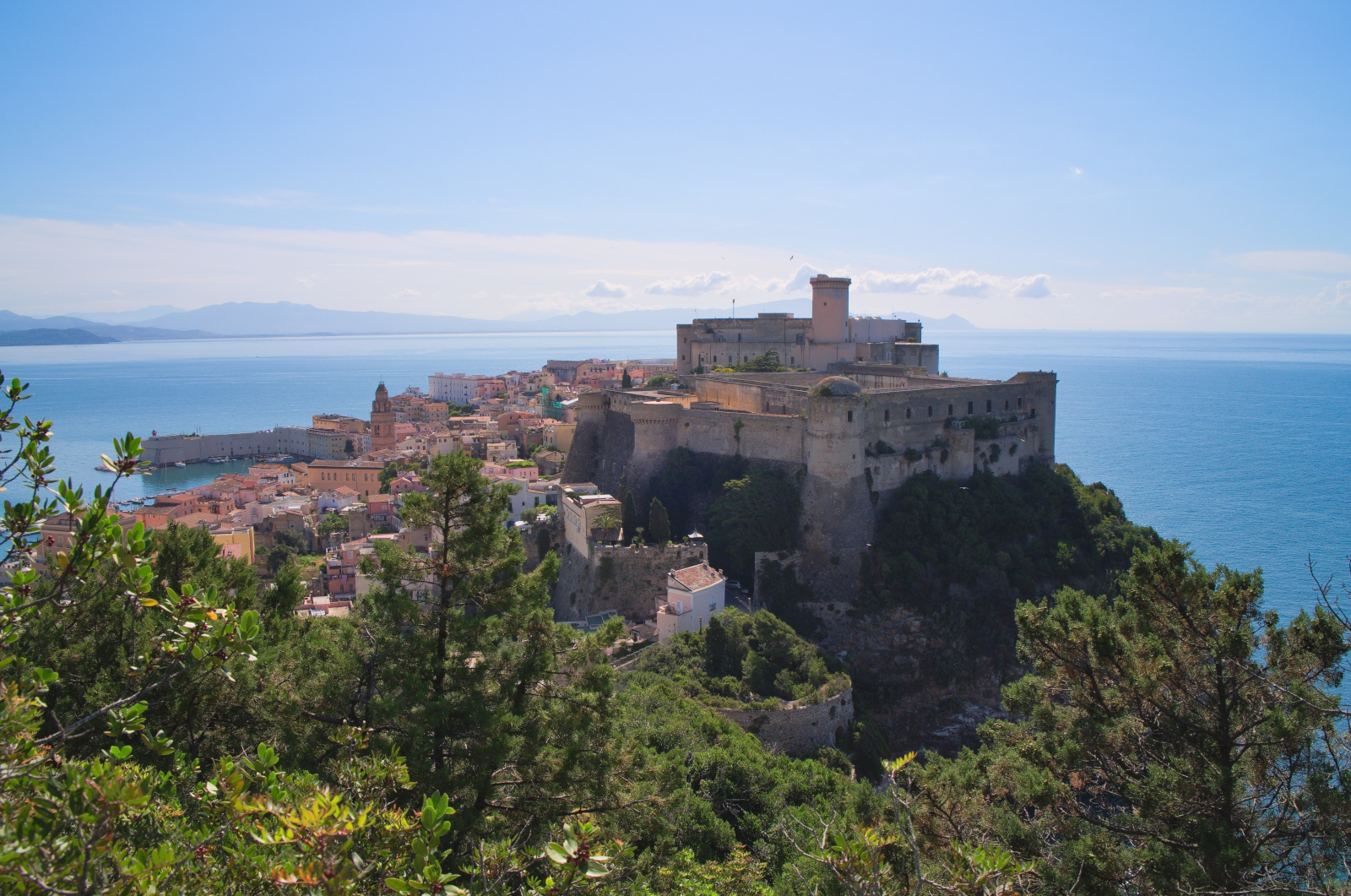
Gaeta has always been a combination of tourist town (ruins of Roman villas are still discovered) and mililtary stronghold (one of the major events of the Unification of Italy was the fall of Gaeta; the port retains a naval base with an occasional American ship stationed there).
- The Angevin-Aragonese Castle. It dates back to Roman times,
and during the Middle Ages was built up by the House of Anjou
and the House of Aragon when they exchanged control of southern
Italy. During the period of the Kingdom of Italy and the Italian
Republic it served as both a military prison (with very, very
poor conditions even into the 1970s) and a NATO headquarters.
You can now tour the prison (guide in Italian, alas) but not the
military headquarters.
By the way, the mountain I'm hiking in this photo is called the Split Mountain, and is associated with a legend wherein its three enormous grottos, which open onto the sea, were created when Jesus cried out from the cross. I should qualify that scientific study of the mountains does not support this legend, but there are a few chapels. Unfortunately, the grottos were closed this year due to repairs. -
The Church of St. John By the Sea dates back to the 8th or 9th century. Most of its frescoes have been damaged by time, but this one remains.

-
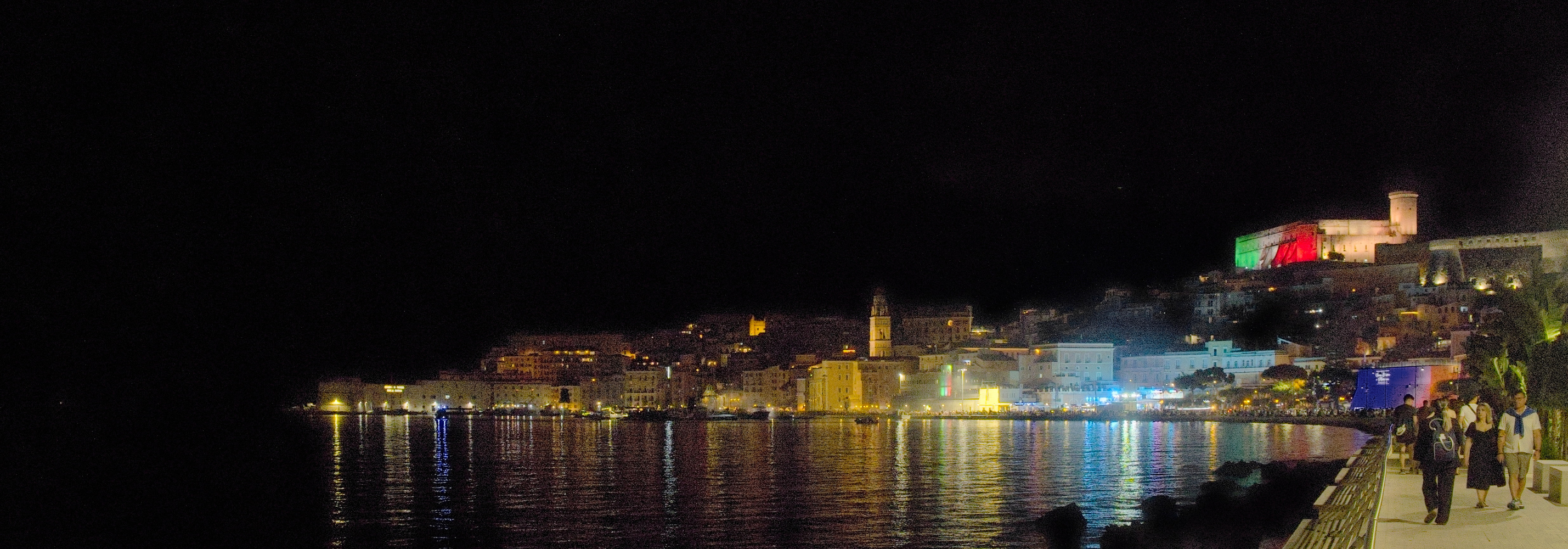
At the beginning of June, Italians celebrate the Day of the Republic, and Gaeta celebrates the Feast of its patron saints, Erasmus and Marcianus. For a few days, there were a lot of fancy light shows, carnival attractions, and food stands.

-
This is what I call Italian food: these are Neapolitan pastries. (Except the cannolo, which is Sicilian.) You won't find it at most so-called Italian restaurants. However! If you go to New Orleans, there's a place called Brocato's that does sell some of this! Some of the items pictures are a babà, a Santa Rosa (a kind of "sfogliatella"), and either a millefoglie ("thousand leaves") or a diplomatico -- the last two look alike.

Elena
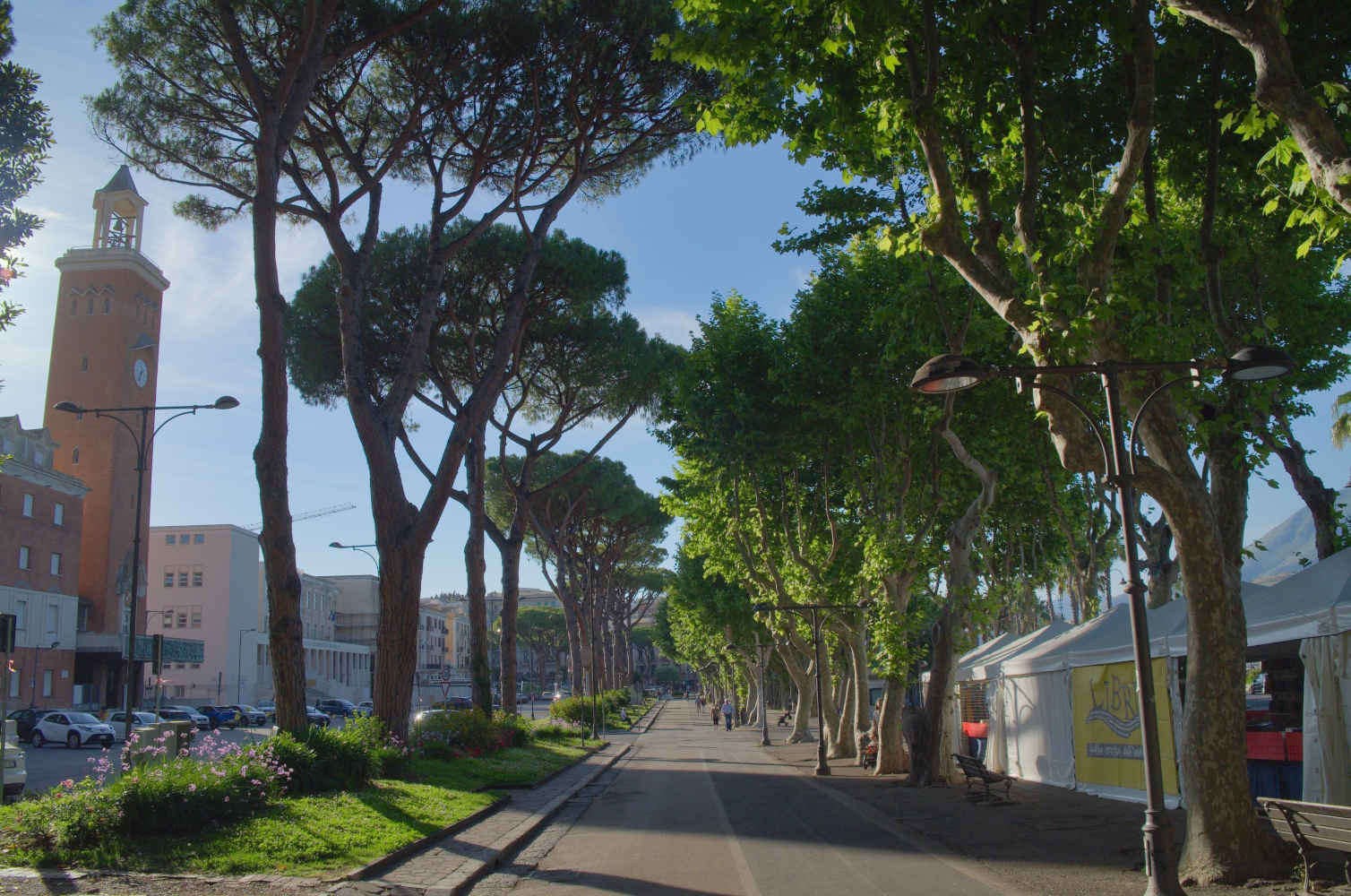
The more modern neighborhoods of Gaeta lie in an area that was once a separate city called Elena.
- It has some very scenic walkways.
- It also has the city's beaches, which are some of the best in
the world. The two mountains on either side largely protect them
from the currents. (This photo is from 2018; apparently I didn't
like the photos I took this year.)

The Redeemer's Mount
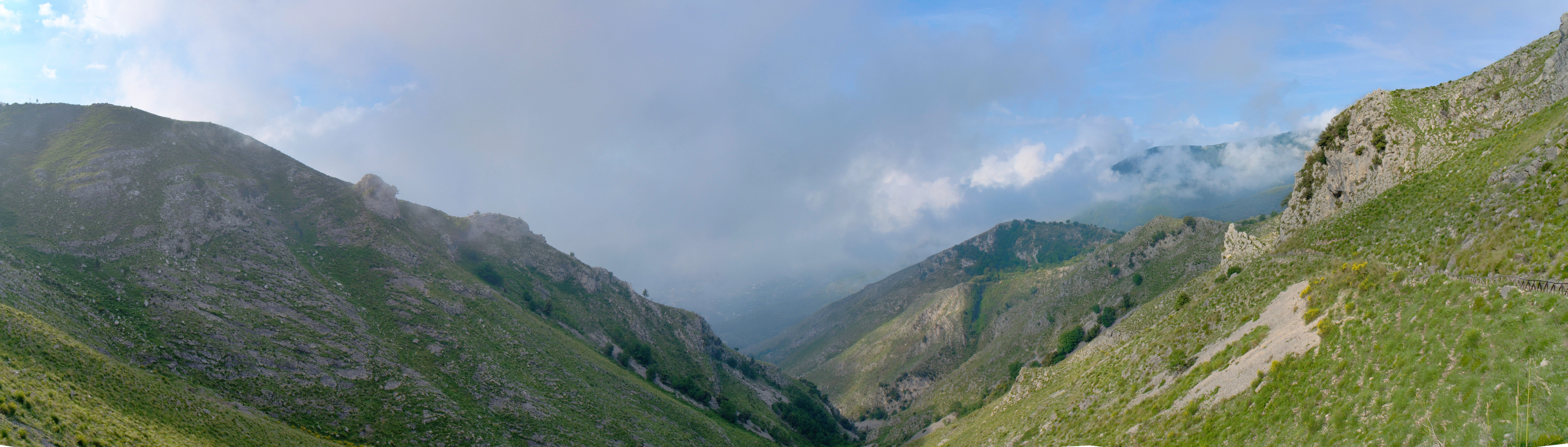
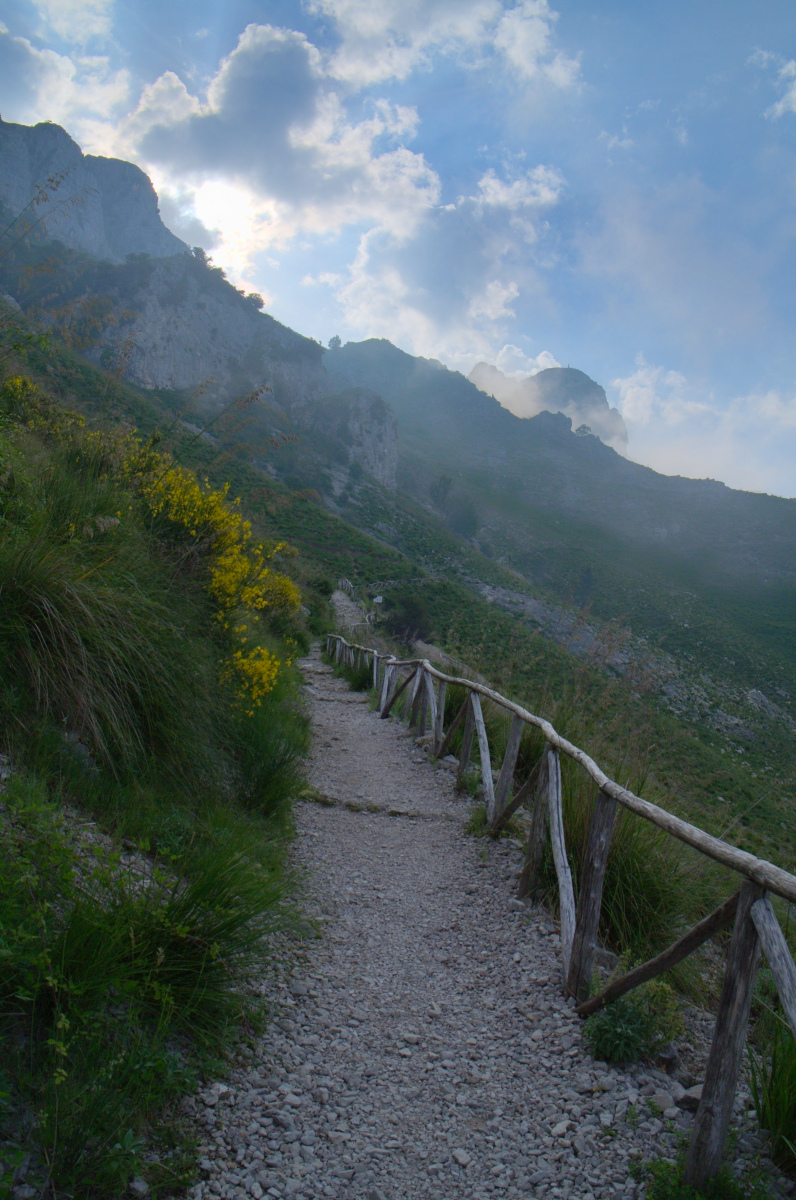
A few miles from Gaeta is a mountain on which Pope Leo XIII erected a chapel and a statue of Jesus. It is visible for miles and miles around, but it's a bit of a hike.
- It was a bit foggy and cloudy the day we went up, so while we
enjoyed some dramatic views of the clouds and the valleys, the
view of the sea and the coastline below was obscured.

- One of my daughters discovered a rock that looks as if it's
praying. You might have to look carefully to see it.

- finally we made it to the top

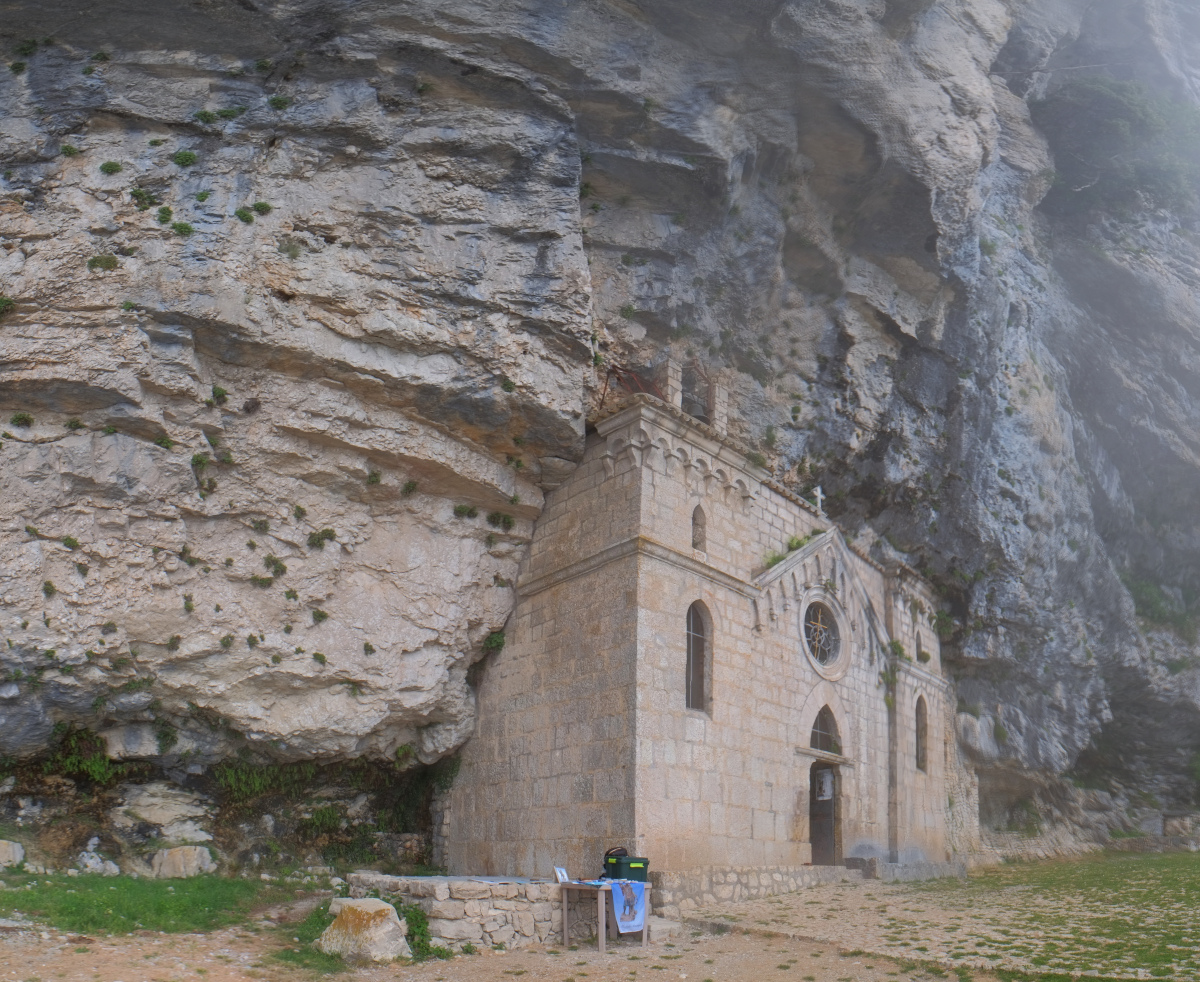
- On the way both up and down you can pass the Hermitage of St.
Michael, a chapel carved from the mountain face that dates back
to the 9th century.